The framework for Waldorf Pedagogy is formed on three stages of childhood development called Early, Middle, and Late which are very important to differentiate both for teachers as well as for parents. Each period spans approximately 7 years and coincides with various changes happening in the child’s body, mind, and spirit (or consciousness).
Waldorf middle school (Grades 6–8) matches the emotional intensity of early adolescence with a rigorous, arts-integrated curriculum. It focuses on critical thinking, hands-on experimentation with an approach founded in phenomenology, and understanding cause-and-effect, all while helping students navigate complex social dynamics and identity development.
The Waldorf approach is deeply tailored to how these students experience the world. Rather than just rote memorization, the middle school curriculum pushes students to discover the laws, relationships, and forces behind what they are studying.
- Sixth Grade: The curriculum mirrors the student’s newfound awareness of the physical world. History explores Roman law, the Middle Ages, and Islamic culture. Science introduces mineralogy, physics, and astronomy, while math transitions into practical, business math, and geometric drawings develop from freehand geometry.
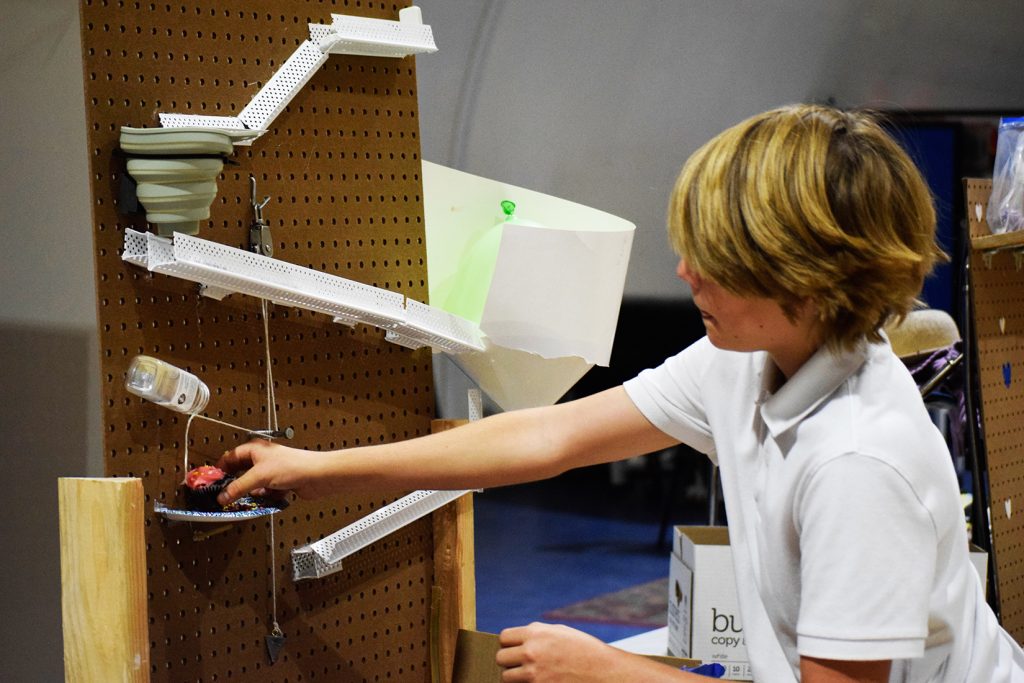
- Seventh Grade: Designed to match the emotional awakenings of puberty, the curriculum explores periods of exploration and questioning. Students study the Renaissance, African history, exploration, and relevant biographical studies. Science becomes more intricate with the study of mechanics during the physics curriculum and additional topics that include inorganic chemistry and human physiology. Creative Writing is also studied along with more advanced expository writing.
- Eighth Grade: The final middle school year focuses on American history, the industrial revolution, modern times, China, and world geography. Science expands into meteorology, organic chemistry, and anatomy, while students synthesize their educational journey through an independent research project and a major class trip or service project.